
How to Write a CV in Germany: The Complete Guide for Foreigners
Moving to Germany and need to write a CV? This guide explains the German Lebenslauf format, what employers expect, and how to stand out as an international applicant.
Writing an application right now? BewerbungsGenius creates it from the job ad – your first one is free. See how it works →
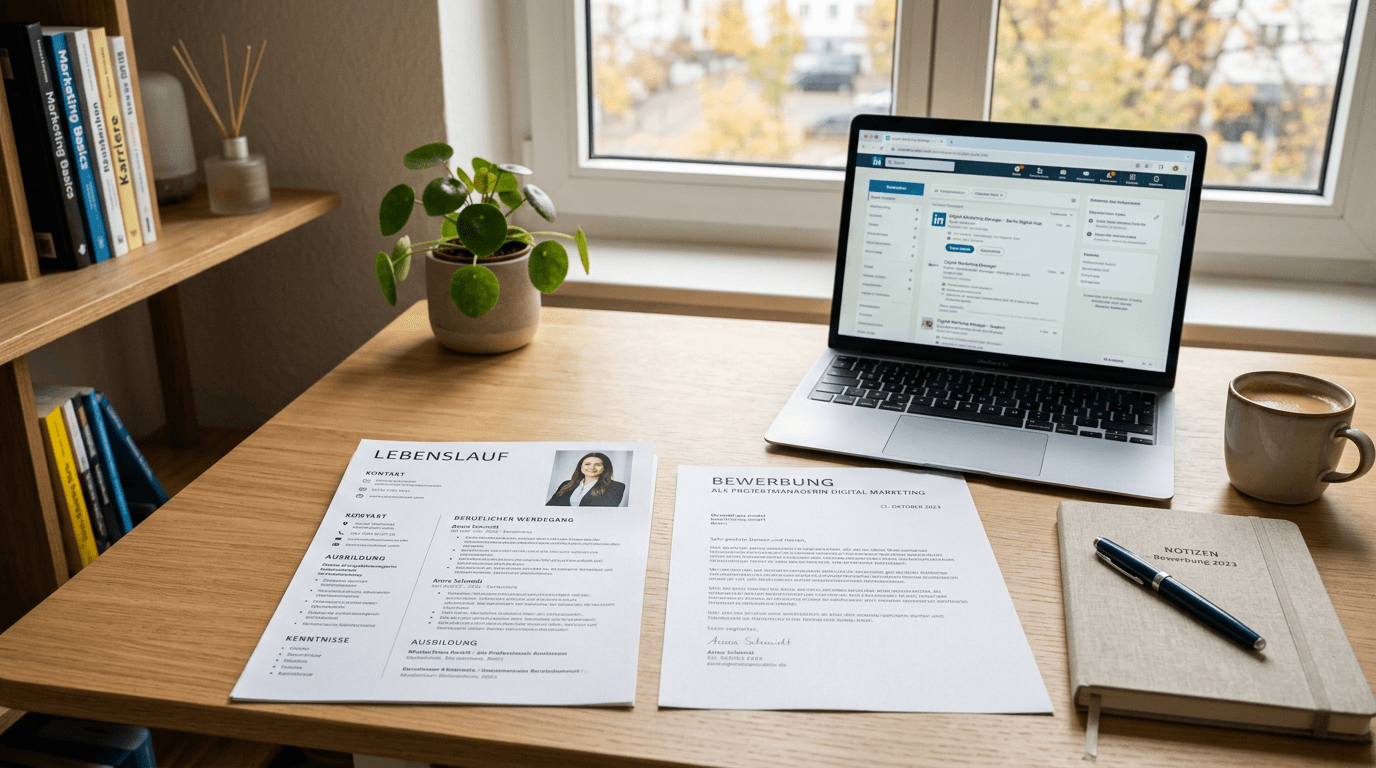
Why German CVs Are Different From What You Know
If you've moved to Germany from India, Bangladesh, the Philippines, or anywhere else, you'll quickly discover that the German job application process has its own rules. A German CV — called a Lebenslauf — is not the same as a resume in the US, UK, or South Asia. Understanding these differences is the first step to landing your job.
The good news: once you know the format, it's straightforward. And German employers actively value international experience. They just want to see that you've taken the time to understand how things work here.
The German Lebenslauf: Structure and Format
A German CV follows a strict tabular format (tabellarischer Lebenslauf). Think of it as a two-column table: dates on the left, descriptions on the right. Everything is listed in reverse chronological order — your most recent experience comes first.
Required Sections
Personal Information (Persönliche Daten)
This section goes at the top and includes more details than you might be used to:
- Full name
- Address (German address preferred)
- Phone number (German number with +49)
- Email address (professional — avoid nicknames)
- Date of birth
- Nationality (optional but common)
One major difference: German CVs typically include a professional photo in the top right corner. While not legally required, roughly 80% of applicants include one. It should be a professional headshot taken at a photo studio (Bewerbungsfoto), costing around 30-80 EUR.
Work Experience (Berufserfahrung)
List each position with:
- Company name and location
- Your job title
- Employment period (MM/YYYY format)
- 3-5 bullet points describing your key responsibilities and achievements
Use concrete numbers where possible: "Managed a team of 12" is stronger than "Managed a team."
Education (Ausbildung)
List your degrees with the institution name, location, and graduation date. For international degrees, add a brief explanation. For example:
"B.Tech Computer Science, IIT Delhi (equivalent to German Diplom-Informatiker)"
If you've had your degree officially recognized through the anabin database or the Recognition in Germany portal, mention this.
Languages (Sprachkenntnisse)
This is especially important for international applicants. Use the CEFR scale:
- A1/A2: Basic
- B1: Intermediate — sufficient for many practical jobs
- B2: Upper intermediate — standard for office jobs
- C1/C2: Advanced to native level
Always list German first, then English, then your mother tongue. If you have a certificate (Goethe, telc, TestDaF, IELTS, TOEFL), include it.
Additional Skills (Weitere Kenntnisse)
IT skills, driving license (Führerschein), certifications, and relevant software knowledge belong here.
The Cover Letter: Your Story in One Page
German applications almost always require a cover letter (Anschreiben). This is a formal, one-page letter that explains why you're the right person for this specific job.
The structure follows a clear pattern:
- Header: Your contact details and the company's address
- Subject line: The exact job title and reference number
- Opening paragraph: Why you're interested in this role
- Main paragraph: Your relevant experience and skills
- Closing: Your earliest start date and salary expectation (if requested)
Common mistake: Don't just repeat your CV in text form. The cover letter should tell a story that connects your background to the company's needs.
Common Challenges for International Applicants
No German Work References (Arbeitszeugnisse)
In Germany, every employer issues a formal work reference letter (Arbeitszeugnis) when you leave. These are essentially coded evaluations. International applicants usually don't have them — and that's okay.
What you can do instead:
- Get reference letters in English from your previous employers
- Have them translated (a simple translation is fine, no sworn translator needed)
- In your cover letter, briefly explain that you have international references available
Employment Gaps
If you have a gap between arriving in Germany and starting work, that's completely normal. Label this period actively:
- "German language course (B1) at Volkshochschule Berlin"
- "Integration course and professional orientation"
- "Volunteering at [organization]"
ATS Systems and Digital Applications
Many German companies use Applicant Tracking Systems (ATS) that scan your CV before a human sees it. To pass these filters:
- Use standard section headings (Berufserfahrung, Ausbildung, Sprachkenntnisse)
- Include keywords from the job posting
- Keep formatting clean — avoid tables, graphics, or unusual fonts
- Submit as PDF
Where to Find Jobs in Germany
- Bundesagentur für Arbeit (Federal Employment Agency) — free counseling, also in English
- LinkedIn and XING — XING is Germany's local LinkedIn equivalent
- Indeed.de, StepStone, Glassdoor — major job boards
- Make it in Germany (government portal for international professionals)
- Zeitarbeit (temp agencies) — great for getting your foot in the door
Your International Background Is an Asset
Don't hide your international experience — highlight it. German companies need people who:
- Speak multiple languages
- Understand different markets and cultures
- Have proven they can adapt to new environments
- Bring fresh perspectives
In your cover letter, frame your international background as a strength: "Having worked in both [country] and Germany, I bring a unique perspective that helps bridge cultural gaps in international teams."
Next Steps
Now you know how the German CV system works. The next step is to create your Lebenslauf. If you need help getting started, try the free CV builder at Bewerbungsgenius — it's designed to help you create a professional German CV, even if you're new to the system.
Ready to write your own application?
BewerbungsGenius helps you put together an application like this in minutes: paste the job ad, and your cover letter and CV are tailored to that exact position – in flawless German, even if German isn’t your first language. Your first application is free.
Create your first application for freeTransparency Notice
This article was created with the support of Artificial Intelligence and reviewed and edited by our editorial team. We combine modern technology with human expertise to provide you with the best career tips.